






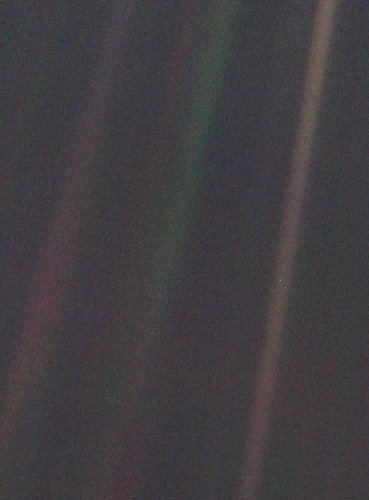
Voyager 1 distance from Earth is a significant milestone in space exploration. As it approaches 1 light-day away, scientists are eager to understand what lies beyond our solar system.
What is Voyager 1’s current distance?
As of now, Voyager 1 is approximately 1 light-day away from Earth, marking a significant milestone in its journey through interstellar space. This distance translates to nearly 24 billion kilometers, showcasing the remarkable achievement of human engineering and exploration.
The spacecraft, launched in 1977, has been traveling for over four decades, continually sending back valuable data about the outer planets and the heliosphere. Its current distance from Earth emphasizes not only the vastness of space but also the enduring mission of the Voyager program.
The engineering behind Voyager 1 enables it to operate under extreme conditions and communicate back to Earth, despite the enormous distance.
As Voyager 1 continues its journey, scientists and enthusiasts alike are eager to learn more about the mysteries that lie ahead in the depths of space.
The significance of 1 light-day
The distance of Voyager 1 from Earth is not just a number; it represents a significant milestone in human exploration. As the spacecraft approaches 1 light-day away, this distance highlights the vastness of space and our place within it.
This milestone serves multiple purposes:
- Scientific Value: The data gathered by Voyager 1 continues to provide insights into the outer planets and the boundaries of our solar system.
- Technological Achievement: Reaching such distances showcases the advancements in engineering and communication technology.
- Public Interest: Events like these capture the imagination of the public and inspire future generations of explorers.
As Voyager 1 distance from Earth continues to increase, each light-day brings us closer to understanding the mysteries of the cosmos. The journey ahead is not just a voyage through space but also a testament to human curiosity and perseverance.
Discoveries from Voyager 1
Since its launch in 1977, Voyager 1 has provided invaluable insights into our solar system and beyond. As the spacecraft approaches a distance of 1 light-day from Earth, it continues to send back data that enhances our understanding of the universe.
Some key discoveries from Voyager 1 include:
- The heliosphere’s boundary: Voyager 1 was the first human-made object to enter interstellar space, offering crucial information about the edge of our solar system.
- Cosmic rays: The spacecraft has been measuring cosmic rays, helping scientists comprehend the composition and behavior of high-energy particles outside the solar system.
- Magnetic fields: Voyager 1’s instruments have provided data on the magnetic fields present in the outer solar system, shedding light on their interactions with solar winds.
As Voyager 1 continues its journey, the growing distance from Earth serves as a reminder of the vast expanse of space and the many mysteries yet to be unraveled.
Future of Voyager 1’s mission
The future of Voyager 1’s mission is as intriguing as its past achievements. As it continues to travel further into interstellar space, the Voyager 1 distance from Earth will only increase, presenting both challenges and opportunities for scientists. With each passing day, the spacecraft sends back valuable data that could reshape our understanding of the cosmos.
With its primary mission long completed, Voyager 1 now embarks on an extended mission to explore the outer boundaries of the heliosphere. This journey is not just about distance; it’s about gathering insights into the nature of cosmic radiation and solar winds.
Scientists remain hopeful that Voyager 1 will continue to function for years to come, providing data that could answer fundamental questions about the universe. As it reaches milestones, the excitement grows about what discoveries await us in the vast expanse beyond our solar system.
What lies beyond our solar system?
As Voyager 1 continues its journey, the question of what lies beyond our solar system becomes increasingly intriguing. At a distance of nearly 1 light-day from Earth, Voyager 1 is venturing into the vast unknown, where the mysteries of the universe await. Scientists are particularly keen on understanding the interstellar medium, the matter that exists in the space between star systems.
Some key areas of interest include:
- The Galactic Cosmic Rays: Understanding their origins and effects on space travel.
- Interstellar Magnetic Fields: Exploring how they influence the structure of the universe.
- Potential for Life: Investigating whether conditions exist for life beyond our solar system.
As Voyager 1 distances itself from Earth, the data it sends back could provide invaluable insights into these cosmic phenomena, shaping our understanding of the universe for generations to come.
How Voyager 1 communicates with Earth
Voyager 1, now over 14 billion miles away, communicates with Earth using a carefully calibrated system that has stood the test of time. The spacecraft employs a high-gain antenna to send data back to mission control, allowing scientists to receive valuable information despite the vast Voyager 1 distance from Earth.
To maintain this communication link, Voyager 1 relies on radio waves, which travel at the speed of light. However, as it reaches distances of nearly 1 light-day, the time lag for signals becomes significant. For example, a message sent from Earth takes approximately 17 hours to reach Voyager 1, and vice versa. This delay poses challenges for real-time communication and requires mission planners to make decisions far in advance.
Despite these challenges, the data transmitted continues to provide insights into the outer reaches of our solar system, helping to unravel the mysteries of the cosmos.
The technology behind Voyager 1
Voyager 1, launched in 1977, is a testament to human ingenuity and engineering prowess. As it travels further into space, the technology behind its operation has become increasingly crucial, especially given its current distance from Earth. The spacecraft is equipped with a variety of instruments that allow it to gather data about the interstellar medium, cosmic rays, and magnetic fields.
One of the key components of Voyager 1’s technology is its power source. It uses radioisotope thermoelectric generators (RTGs), which convert heat from radioactive decay into electricity, ensuring that the spacecraft can operate in the cold vacuum of space for decades. Additionally, the onboard communication system employs a highly directional antenna that transmits data back to Earth despite the vast distance.
As Voyager 1 continues its journey, the advancements in technology will play a critical role in extending its operational life and enhancing our understanding of the universe beyond our solar system.
Implications for future space exploration
The increasing Voyager 1 distance from Earth presents both challenges and opportunities for future space exploration. As this spacecraft ventures further into interstellar space, scientists are gaining invaluable insights into the conditions beyond our solar system.
One significant implication is the need for advanced communication technologies. Currently, signals from Voyager 1 take over 22 hours to reach Earth, highlighting the vastness of space. To maintain contact and receive data from future missions, we must develop systems capable of handling longer distances and potential delays.
Moreover, understanding the data collected by Voyager 1 can inform the design of future spacecraft. Key areas to consider include:
- Radiation protection for long-duration missions
- Power generation methods suitable for deep space
- Navigation systems that can operate autonomously
In summary, the journey of Voyager 1 not only enriches our knowledge but also paves the way for the next generation of space exploration missions.
As scientists continue to monitor the Voyager 1 distance from Earth, they are also planning future missions to explore the mysteries of interstellar space. Understanding the Voyager 1 distance from Earth helps us grasp the vastness of our universe and the challenges that lie ahead for space exploration.
By NASA Goddard Photo and Video via Openverse